


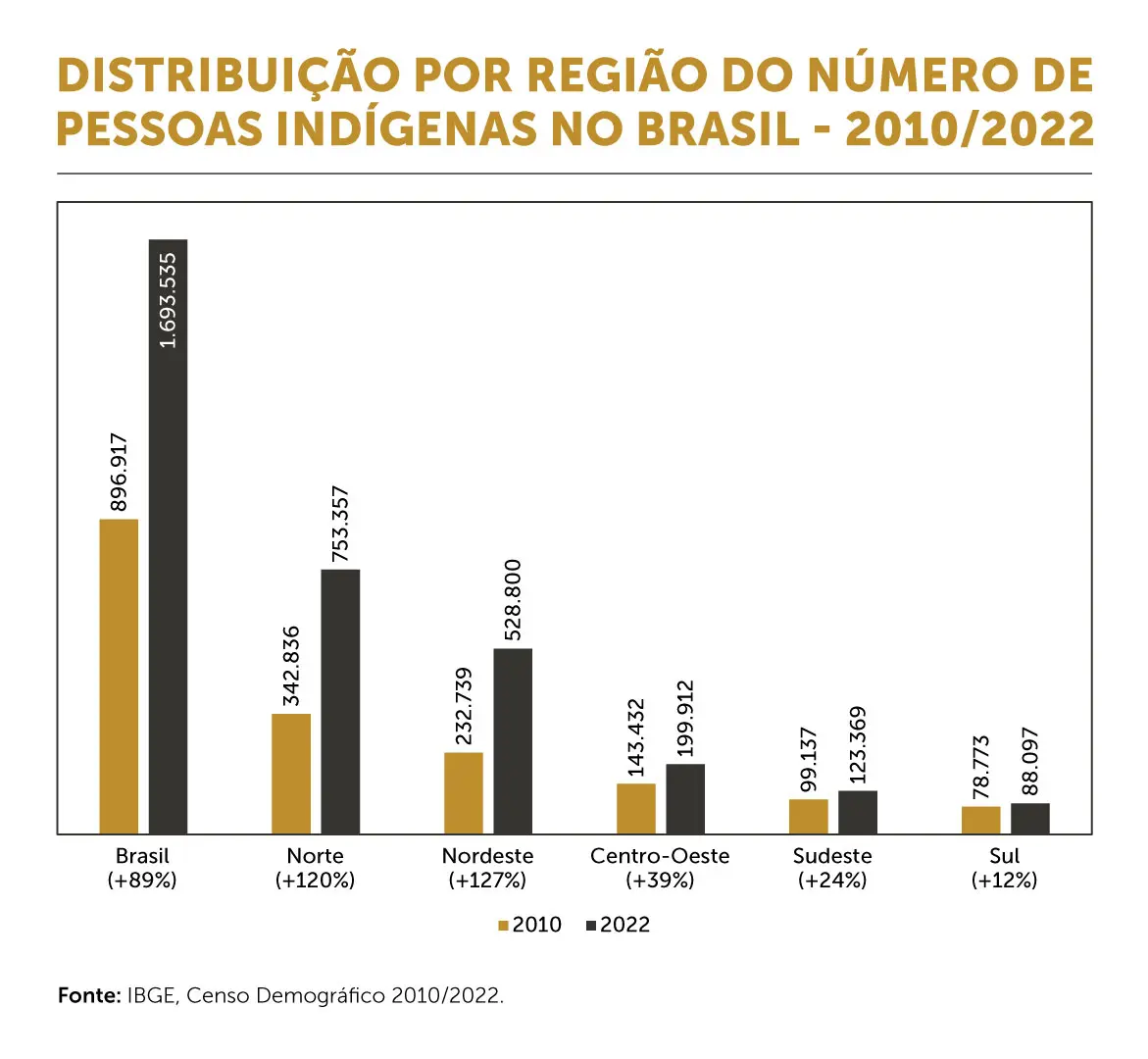
In August, Brazilians were caught by surprise by the news that the number of indigenous people in the country had increased by about 90% in 12 years. From approximately 900,000 in 2010, it reached almost 1.7 million in 2022, according to the Brazilian Institute of Geography and Statistics (IBGE). To illustrate, this figure is equivalent to the population of a metropolis such as Curitiba, in the state of Paraná, or 1% of the more than 200 million inhabitants of the country.
During the data release event, at a ceremony organized by the Ministry of Planning, the minister of Indigenous Peoples, Sonia Guajajara, emphasized the urgency of designing “public policies” for this social stratum. Cimar Azeredo, the interim president of the IBGE at the occasion, agreed with Sonia, adding that the act represented the “discovery of Brazil,” and thanked everyone who participated in the survey. However, Azeredo neither explained the reasons behind such nearly doubled increase in the period nor mentioned who the collaborators in the survey were.
Receba nossas atualizações
How things work
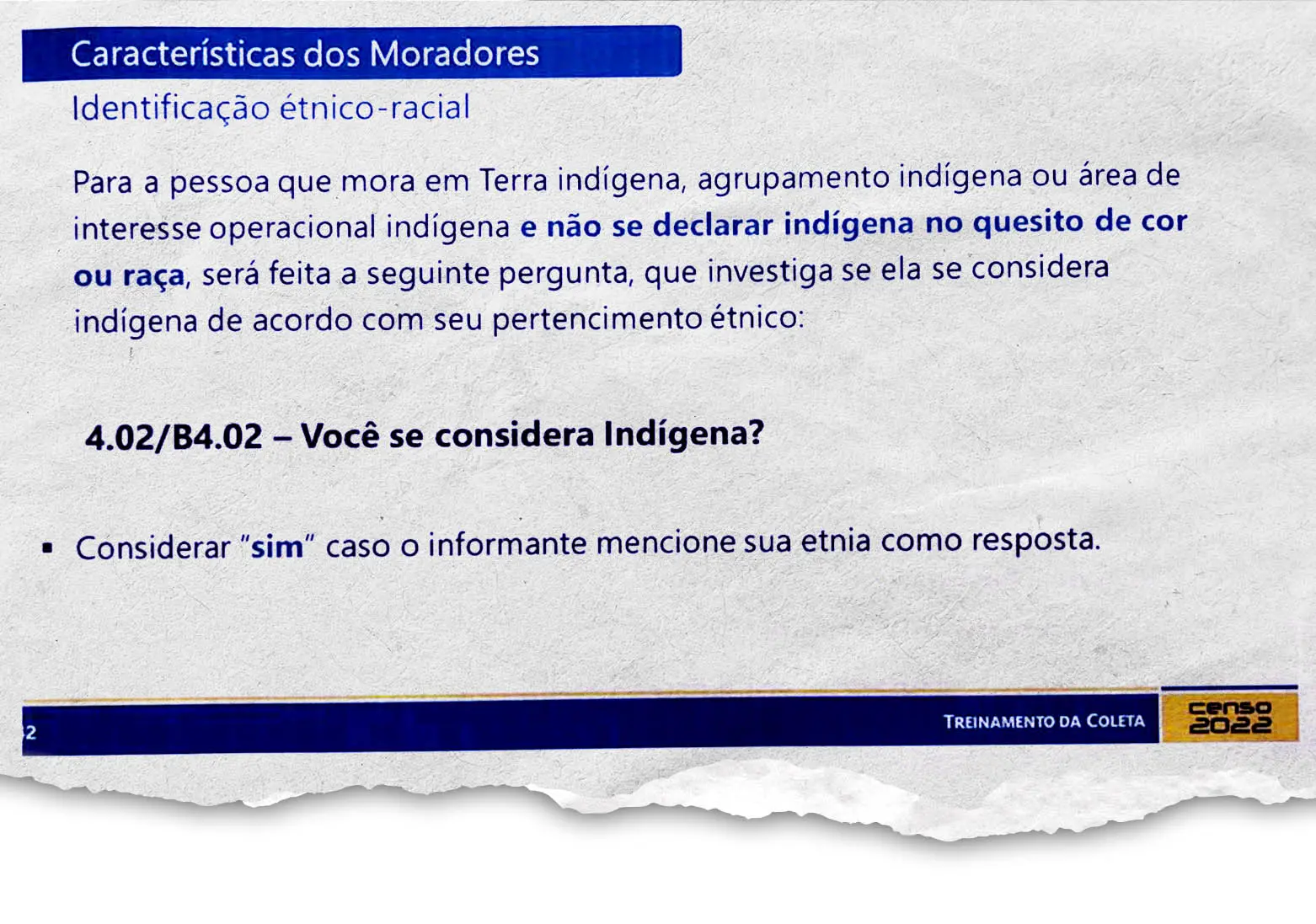
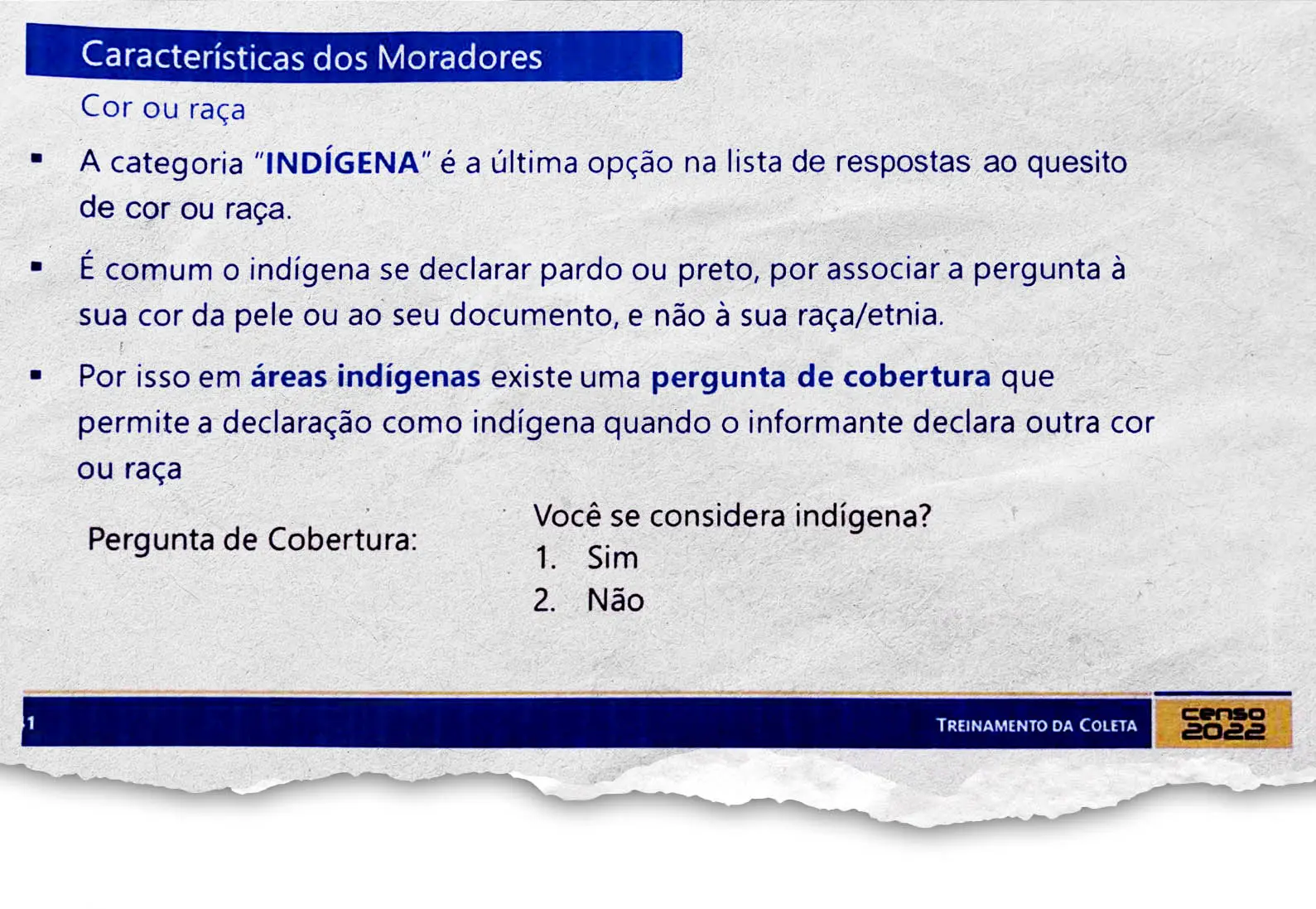
One of the justifications for this scenario is the change in the IBGE’s methodology last year. The Census included an extra question solely for respondents in indigenous lands. This is because, in previous surveys, the IBGE noticed that many people, seen by the institute as having “indigenous ancestry,” answered that their color was “brown” because they saw themselves as mixed-race. Therefore, the Census questionnaire designers included the question “Do you consider yourself indigenous?” in the script, which should be asked if the respondent answered “brown” to the first question. “It is common for the indigenous person to declare themselves as brown or black, associating the question with their skin color or the one recorded in their identification document,” says the IBGE manual. “Therefore, in indigenous areas, there is a ‘coverage question’ that allows the declaration as indigenous when the respondent previously identify themselves as another color or race.”
This change in methodology was discussed in the Parliamentary Committee of Inquiry (CPI) that investigates NGOs. In October, Marta Antunes, one of the technicians at the IBGE, revealed that the institute adapted to international criteria of the United Nations’ “Agenda 2030” to prepare the Census. One of the criteria proposed by the UN is to “listen to the indigenous population.” Therefore, to fulfill such criterion, the IBGE established a partnership with the Articulation of Indigenous Peoples of Brazil, led by minister Guajajara, known for her environmental activism, and with the National Indian Foundation (Funai). The IBGE also called on the Socioenvironmental Institute (ISA), investigated by the CPI of NGOs for abuses committed against indigenous people, whose banners are in support of demarcations and the end of the temporal landmark in Brazil.
“People focus mostly on skin color when this question [‘What is your color?’] is asked,” justified Tiago Moreira, from ISA, who collaborated with the Census. “But when you ask the extra question [whether the person considers themselves indigenous], it opens up to a series of other ethnicity criteria that the question about color does not answer.” Moreira acknowledged that the extra question refers “to indigenous ancestry,” unlike the one about color, which exists in a “more limited context.” “Oftentimes, people are descendants [of original peoples], and even militants in the indigenous movement, but answer ‘brown’ for skin color,” he said.
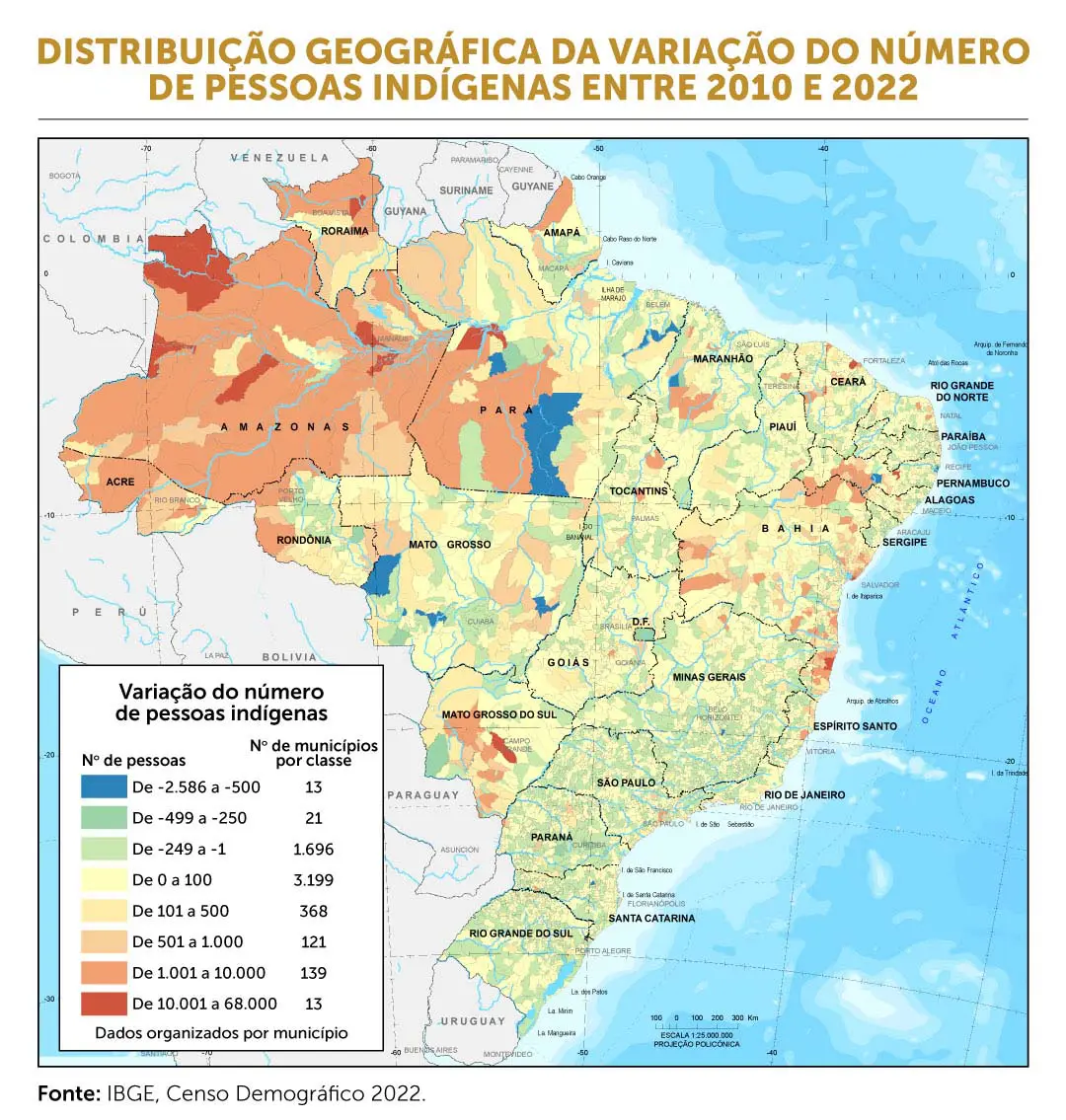
With the new IBGE data in hand, along with the end of the temporal landmark, the Lula government has already signaled that it will demarcate new indigenous lands. Currently, at least 67 locations in 17 states are on the verge of being handed over to “original peoples.” This year, Lula has already signed the homologation of the demarcation of eight territories – six in April and two in September. In January, minister Sonia Guajajara stated that the government would demarcate at least 14 territories in 2023. “The expectation is to conclude the other six by the end of the year,” she announced. “It’s more of an alignment issue.” Similar acts are also expected in 2024. The number of indigenous people in a particular area is a crucial factor for Funai to define its demarcation, following a survey that involves hiring anthropologists and other specialists in the field.
In a recent speech, Lula assured that indigenous people own a small portion of Brazil’s land. However, the facts dismantle such narrative. Currently, 14% of the country’s territory is designated for this population – equivalent to 0.7 km² per indigenous person, while the rest of Brazilians occupy 0.03 km² each. If the Executive Branch continues to implement minister Guajajara’s policy, the extent of these lands could amount to nearly 30% of Brazil. In general terms, it would be 1.5 km2 for each indigenous person, contrasting with only 0.02 km² for Brazilians who do not fall into this category.
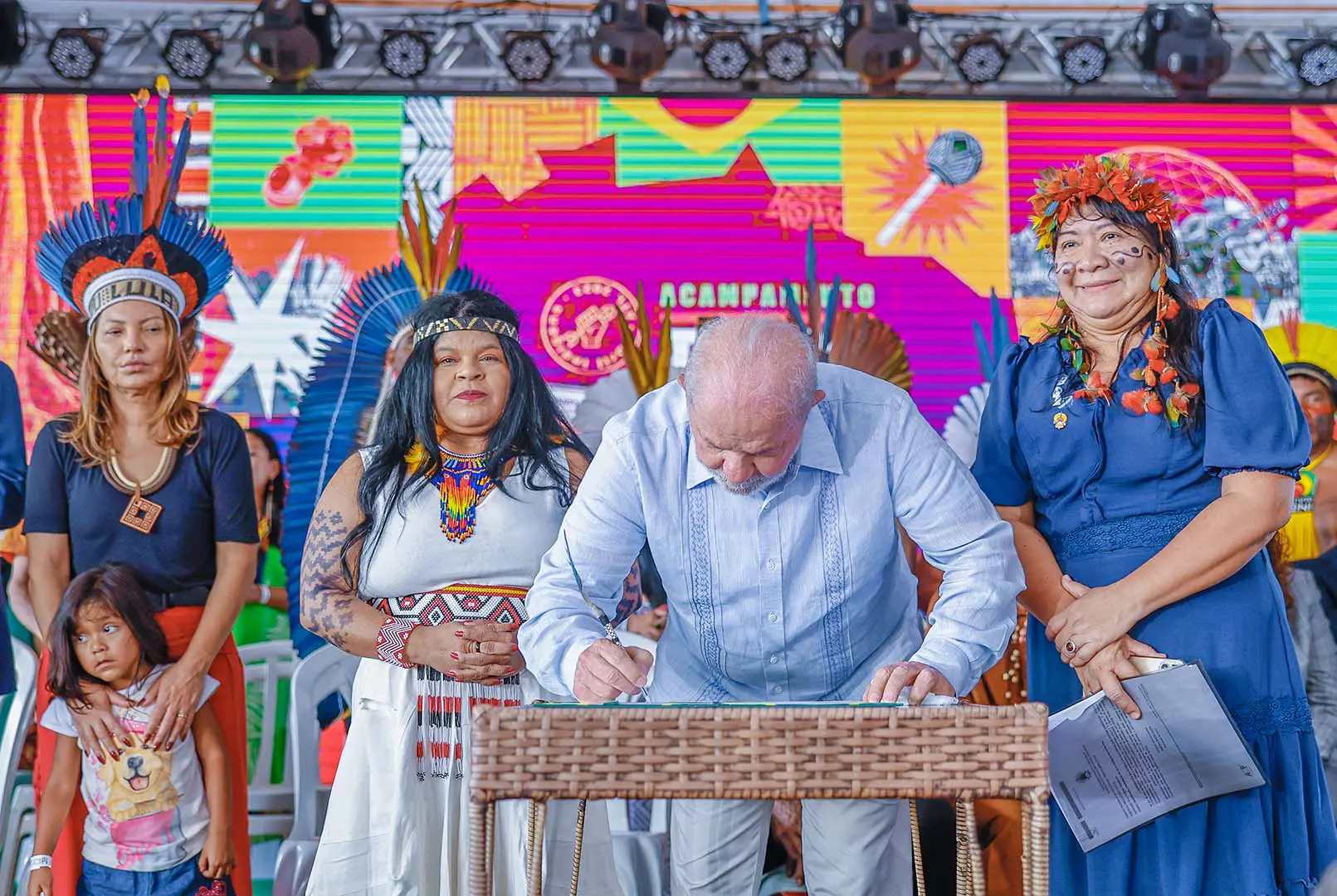
A great portion of these lands, currently occupied by producers and people who identify themselves as mixed-race, hold valuable natural resources in their soil, such as gold and diamonds, as well as a great amount of potassium. Their conversion into federal property has generated conflict between producers and agents of the National Force, especially in the states of Amazonas and Pará. In operations to evict lands that have become indigenous property, agents have dislodged entire families, with up to 20 people, and used force when they refused to leave. In a CPI hearing in August, Herderli Alves, leader of the Movimento Pardo-Mestiço Brasileiro (or the Brazilian Movement for Brown and Mixed-race People), from Amazonas, expressed her concern of increasing demarcations on productive areas, which are the locals’ sole livelihood, making them even more dependent on NGOs operating in the Amazon under the pretext of caring for the biome.
Even with all this distribution of money, supposedly for the benefit of indigenous people, these individuals continue to live in poverty and become increasingly dependent on the state and foreign NGOs.
A lucrative business
By opening the “black box” of Amazon NGOs, the CPI exposed the third sector as wolves in sheep’s clothing, revealing a scheme of bureaucrats who are profiting at the expense of ordinary people, all with the blessing of the Brazilian government. One of the objectives of the CPI is to bring more transparency to the Amazon Fund, created in 2008, whose funds come mostly from Norway and Germany, with a small contribution from Petrobras. BNDES is responsible for managing the current R$4 billion that keep a highly profitable industry running.
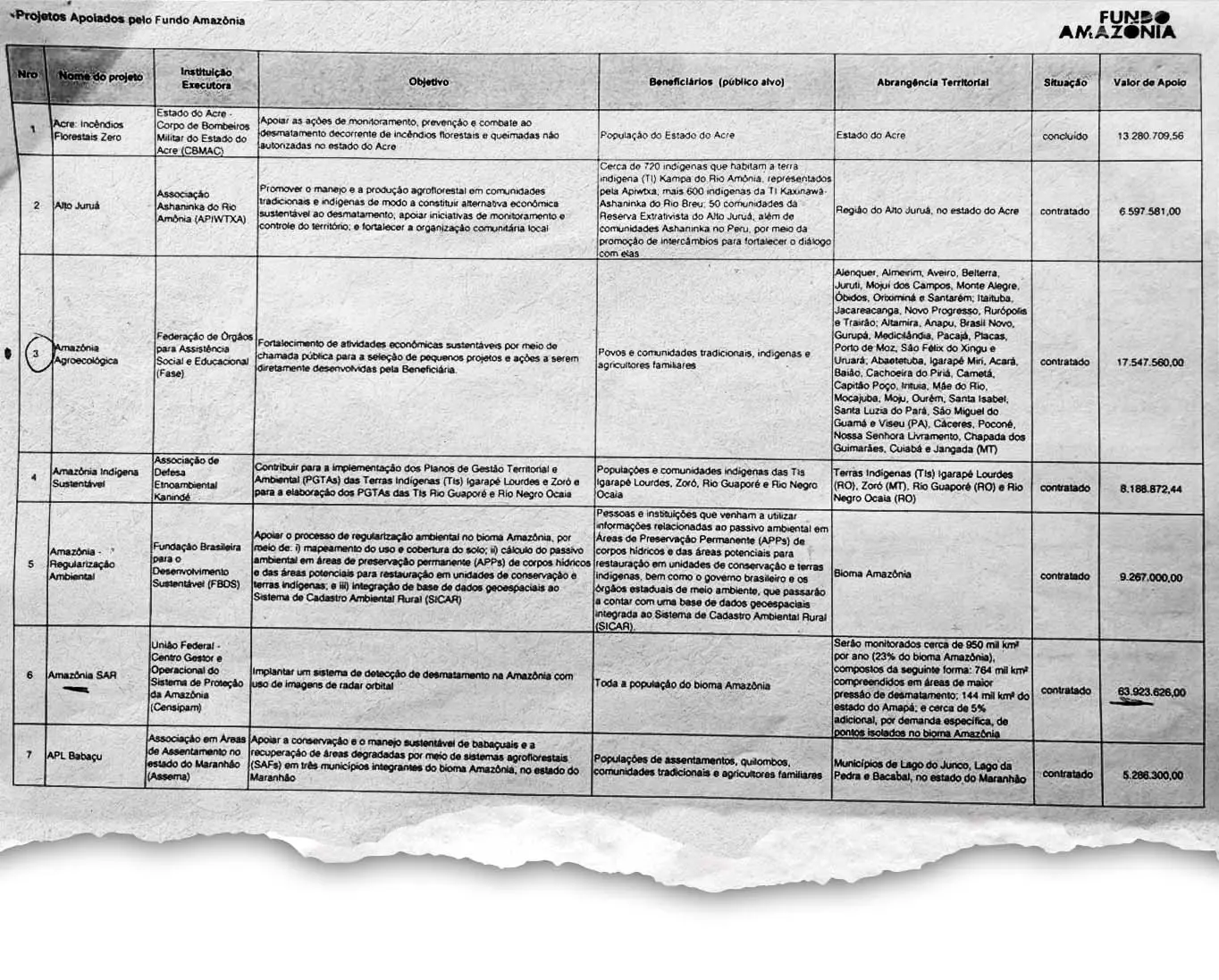
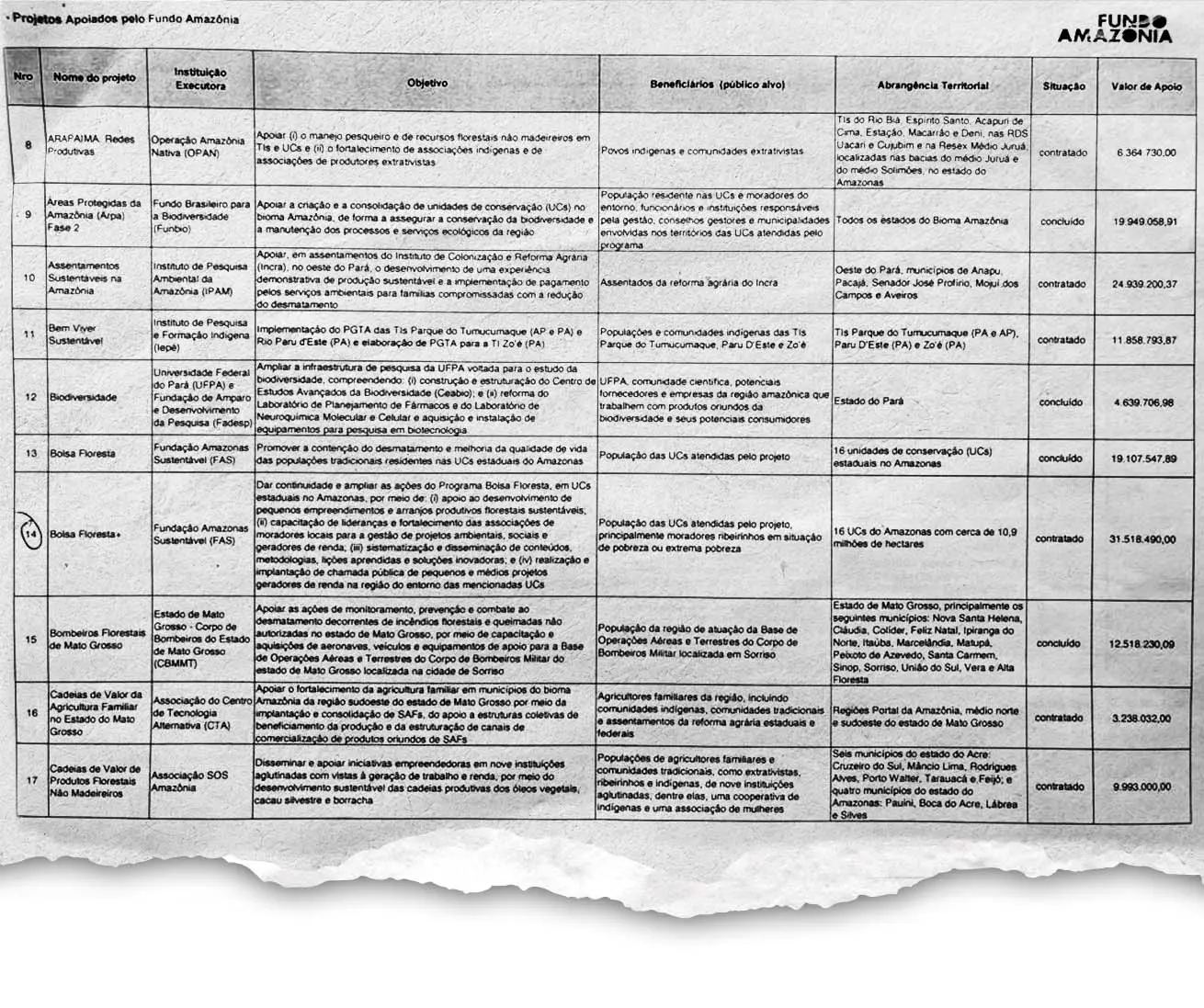
The idea of creating the fund arose from discussions at the UN, which proposed a series of mechanisms for addressing “climate change.” With donations from developed countries, emerging countries like Brazil could, in the future, create a Green Fund capable of supplying “independent organizations,” in this case, NGOs. As a matter of fact, BNDES documents show the figures and explain how NGOs raise substantial amounts of money from the fund to carry out projects “for the benefit of indigenous people,” which are not always proven to materialize due to a lack of oversight. In 99% of cases, the descriptions of the initiatives are vague and intricate.
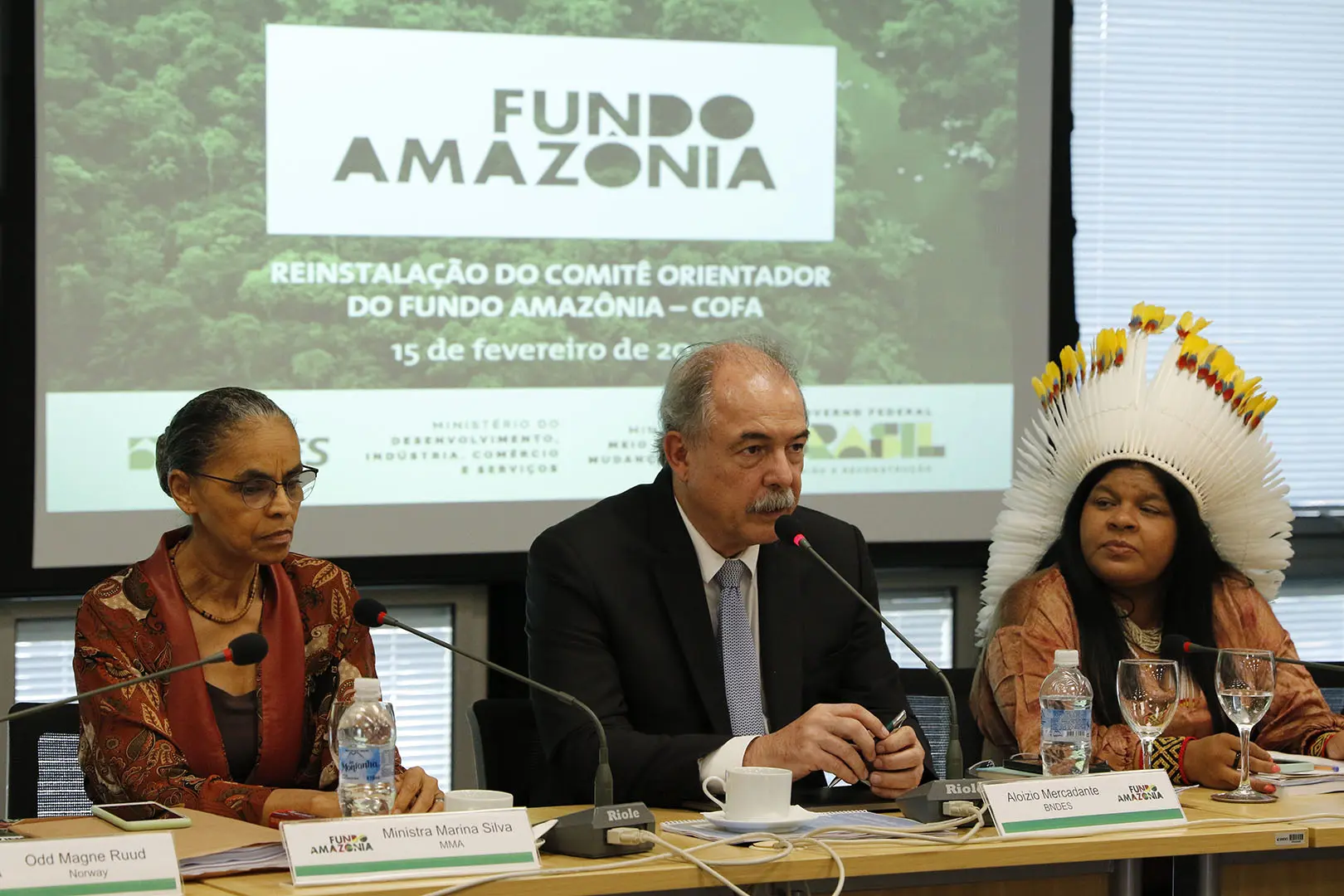
In 2012, for example, the Amazon Environmental Research Institute (Ipam) raised almost R$ 25 million to support, in settlements of National Institute for Colonization and Agrarian Reform (Incra) in the west of the state of Pará, “the development of a model experience of sustainable production and the implementation of payment for environmental services to families committed to reducing deforestation.” Ipam became famous after the CPI revealed that the minister of Environment and Climate Change, Marina Silva, is an honorary advisor to the NGO and, at the same time, holds a position in the fund responsible for directing money to NGOs. The organization raised almost R$ 35 million from the fund last year, and one of the directors admitted to using 80% of the amount for consulting, national and international travel, and payroll.
Two years before Ipam, the NGO Amazonas Sustainable Foundation (FAS) received just over R$ 30 million from the fund to “continue and expand the actions of Bolsa Floresta (Forest Allowance) Program” (a kind of Bolsa Família, or Family Allowance, created in Amazonas, providing R$ 100 to families), in conservation units in the state, “through support for the development of small sustainable enterprises and forest management arrangements.” In 2015, the SOS Amazon Association received approximately R$ 10 million to “disseminate and support entrepreneurial initiatives in nine institutions grouped to generate work opportunities and income, through the sustainable development of vegetable oil and wild cocoa production chains.”
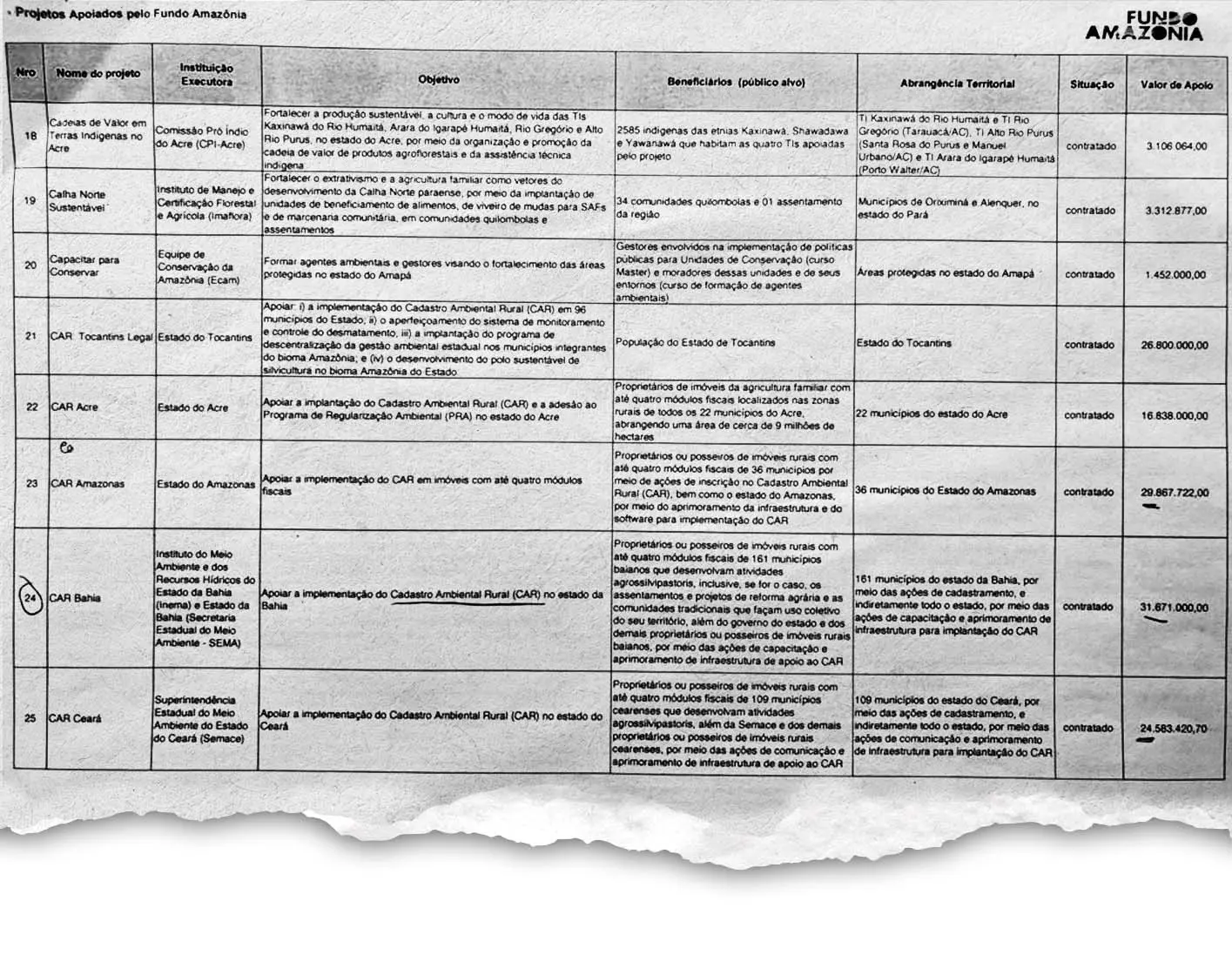
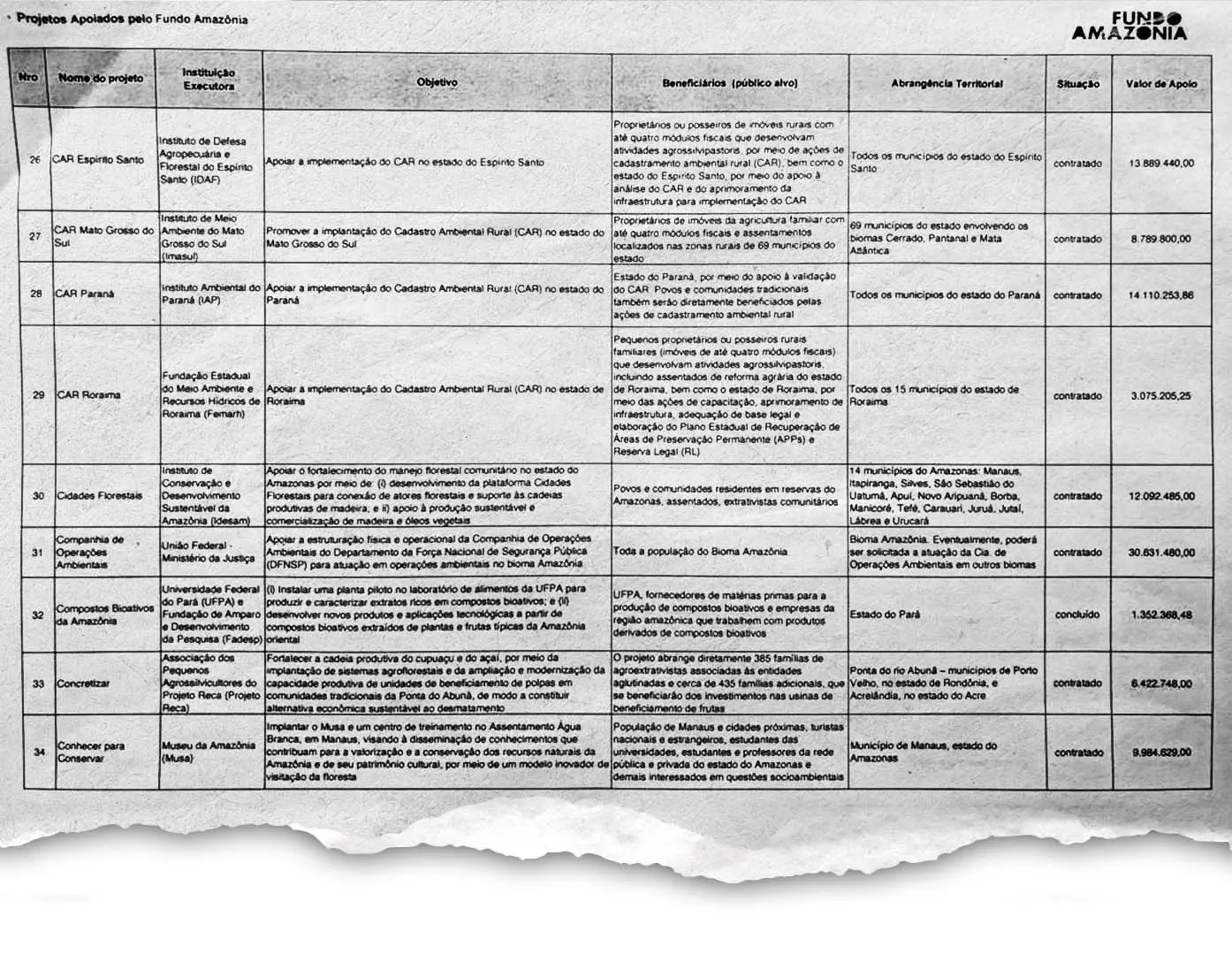
There are also state government agencies that have managed to obtain money to carry out projects that could be developed by the local Executive Branch. This is the case of the State Secretariat for Environmental Development of [the state of] Rondônia, which signed a contract of R$ 30 million with the Amazon Fund in 2014 to “support the environmental management in the state” and combat deforestation in the region. In 2010, the government of Amazonas withdrew about R$ 20 million with the same objective as Rondônia but focused on the south of the state and “reforestation.” However, the region is still one of the areas with the highest rates of illegal deforestation in Amazonas.
Even with all this money distribution, supposedly for the benefit of indigenous people, these individuals continue to live in poverty and become increasingly dependent on the government and foreign NGOs – a parallel power that operates in the Amazon, enabled by the omission of authorities. This is also the conclusion of the CPI of NGOs, which is coming to an end, aiming to present a comprehensive report with legislative proposals that can genuinely help this population. In Brazil, for the last 50 years, few enterprises have been as profitable as a church, a union, or a political party – now NGOs have made the list.





















Sugiro que a redação da Oeste ouça a versão em inglês dessa matéria para avaliação da qualidade do que está sendo publicado.