

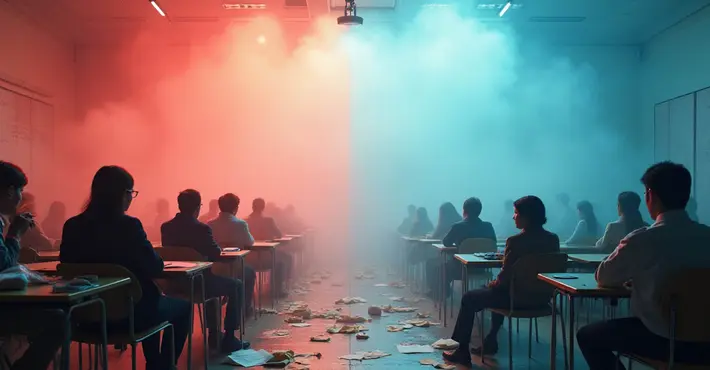
On September 9th, lawyer Jeffrey Chiquini and Curitiba councilman Guilherme Kilter (Novo-PR) were barred from delivering a lecture at the Federal University of Paraná (UFPR) concerning the Supreme Federal Court’s actions. Surrounded by a furious horde of students chanting the war cry, “Retreat, fascist, retreat!”, they were escorted to the faculty lounge by security and only managed to leave the building after the riot police arrived.
The following week, Guarulhos councilman Kleber Ribeiro (PL-SP) faced hostility on the Federal University of São Paulo (Unifesp) campus when attempting to submit a formal request for the use of an auditorium for a lecture on antisemitism, religious intolerance, and social and moral values. A group of students surrounded the lawmaker and his team, forcing them to immediately withdraw from the premises.
Receba nossas atualizações
Such incidents have proliferated in spaces that are supposed to foster the free exchange of ideas. The same phenomenon can be observed outside Brazil. In the United States, universities have recorded a surge of antisemitic episodes following Israel’s military response to the terrorist attacks of October 7, 2023.
In this context, it’s hardly surprising that conservative activist Charlie Kirk was murdered precisely during a university event. Kirk’s death reignited the debate over political intolerance on campuses worldwide. In Brazil, accounts of expulsions, disciplinary punishments, and assaults at universities like the University of São Paulo (USP), the University of Brasília (UnB), the Federal University of the State of Rio de Janeiro (Unirio), and the State University of São Paulo (Unesp) confirm that this is a global problem.
Hounded on all fronts
YouTuber Wilker Leão, a former history student at UnB, gained notoriety on social media for filming classroom arguments where he accused faculty of ideological indoctrination. The university initiated proceedings on November 1, 2024, but Leão claims he was only informed nearly two months later. The final decision, signed by rector Rozana Reigota Naves this September, mandated his expulsion.
The institution asserted that his conduct constituted a disciplinary infraction, given the recordings occurred without faculty authorization. Leão disputes this, arguing that “There’s no law prohibiting recordings in the manner I conduct them.” He positioned the camera so only his face appeared on screen, avoiding exposure of both the instructor and other students. Beyond expulsion, Leão claims he was prevented from enrolling in another course, even after passing the admission exam for social sciences. “I was sanctioned twice for an entirely subjective claim of ‘misbehavior,’ utterly devoid of legal basis,” he stated.
The case gained wider traction when judge Ana Cláudia Loiola of the Federal District Court sentenced him to two years and three months of open-regime detention for slander and defamation against professor Estevam Thompson. The decision was based on six videos of African history classes in which the student referred to the instructor as “tough-guy professor,” “bully,” and “trans-general.” According to the magistrate, these remarks attacked the professor’s honor and violated the principle of academic freedom.
The student who donned the leftist guise
Julia de Castro, a 20-year-old student, enrolled at Unirio in 2020. She was soon disappointed upon realizing that the academic environment, far from being a space for free thought, functioned as a stage for ideological policing. “Those were incredibly distressing times,” she noted. For her first two years, she experienced what she termed the “spiral of silence,” an expression used to describe the suppression of dissenting opinions for fear of isolation and hostility. She crafted academic papers according to the “leftist playbook,” which secured her good grades but caused internal conflict. “My mother even told me I sounded like a communist,” she recounted.
In October 2024, when classmates discovered her political alignment, a university gossip website published her social media posts with the headline: “How can this ‘Julia Bolsonara’ study at Unirio and support that man?” Shortly thereafter, a user tagged her profile with the message “your days are numbered.” She then began receiving death threats on X, then still Twitter, and WhatsApp. Classmates removed her from the class group chat, and her cell phone number was leaked in attack messages. “I cried compulsively that day. Every second brought a new threat.”
According to Julia, professors and the administration were negligent because they “want the situation swept under the rug.” Upon returning to classes, she felt like an outcast, met with disapproving glares. On one occasion, she was accosted by classmates who told her, “People don’t hate you for being right-wing, which is already bad enough, but for voting for Bolsonaro.”
The racist harasser
Victor Henrique Ahlf Gomes, 22, despite graduating with a 9.1 GPA in Law from USP and achieving a perfect score on his thesis, was expelled as a result of a 2022 lawsuit, accused of racism and harassment of a former girlfriend. “I was prosecuted for being right-wing,” he declared, reporting that the vice-director herself allegedly stated he “was not a student fitting the university’s profile” and that his opinions were “fascist, misogynistic, and Nazi.”
According to his defense attorney, Alessandra Parmigiani, “an out-of-context screenshot of a private conversation was used as the central piece of evidence in the process.” This February, judge Gilsa Elena Rios of the 15th Public Treasury Court annulled the expulsion, but USP appealed, and the case remains in the second instance.
A survey by the Sivis Institute, involving over a thousand students from Brazilian public and private universities, found a predominance of leftist thought (46.9%), followed by right-wing (26%), center (16.7%), and undecided or non-respondent (10%). Among faculty, the numbers are even more alarming. A survey conducted by Harvard’s student newspaper revealed that 75% of professors identified as far-left or progressive, 3% as conservative, and 22% as moderate.
The ‘coup-monger’ professor
Sandra de Moraes Gimenes Bosco, a doctor from Unesp and a faculty member since 2010, was dismissed from the Institute of Biosciences at the Botucatu campus, accused of participating in the January 8, 2023, demonstrations in Brasília. She was detained on January 9th in a bus returning from the capital with 44 other passengers. The vehicle was stopped by the Federal Highway Police, who reported that some occupants showed rubber bullet marks and admitted involvement in the invasions. All were released within a few hours. Days prior, Sandra had shared a banner on her Facebook page calling for the caravan.
Unesp initiated administrative proceedings on January 10th, following complaints received by the Ombudsman’s office and an opinion from the Ethics Committee. The document stated that the professor had participated in “criminal, violent, and anti-democratic acts,” classifying her conduct as a “grave disciplinary infraction.” The legal basis was Law No. 10.261/1968, which obliges public servants to “maintain conduct compatible with administrative morality” and provides for dismissal for compromising the dignity of public office. The rector ratified the decision, published in the Federal Official Gazette on April 29th.
According to attorney Rodrigo Saliba, the punishment was abusive: “She was not charged by the Attorney General’s Office, nor is she a defendant before the Supreme Federal Court, yet she was punished as if she had committed proven crimes,” he stated. “It was a political, not a legal, judgment.” He also highlighted that a committee member, later appointed president, had written on social media a day before the proceedings began: “More than a note of repudiation, we must identify and punish these terrorists and criminals from Unesp.”
According to Sandra and defense witnesses, the group returned to the bus as soon as the explosions began. “She was condemned by generalization,” Saliba said. In addition to severe career damage, the episode also resulted in hostilities on social media. “I received threats against myself, my daughter, and my husband from Unesp students,” she recounted. According to the defense, the university did not investigate these incidents.
In an article published in the newspaper Gazeta do Povo, Professor Mayalu Felix, who holds doctorates in language sciences and literature, reported the hostilities she faced for using texts by authors such as Roberto Motta, Olavo de Carvalho, and Luiz Felipe Pondé in the classroom. According to Mayalu, who has taught for 20 years at a public university in Maranhão, the academic environment has become “a place of singular discourse, of a single ideology, of monologue.” “There is no room for dissent,” she asserted. “Nor for questioning, which is the very foundation of scientific development.”
From communist hegemony to the Worker’s Party dominance
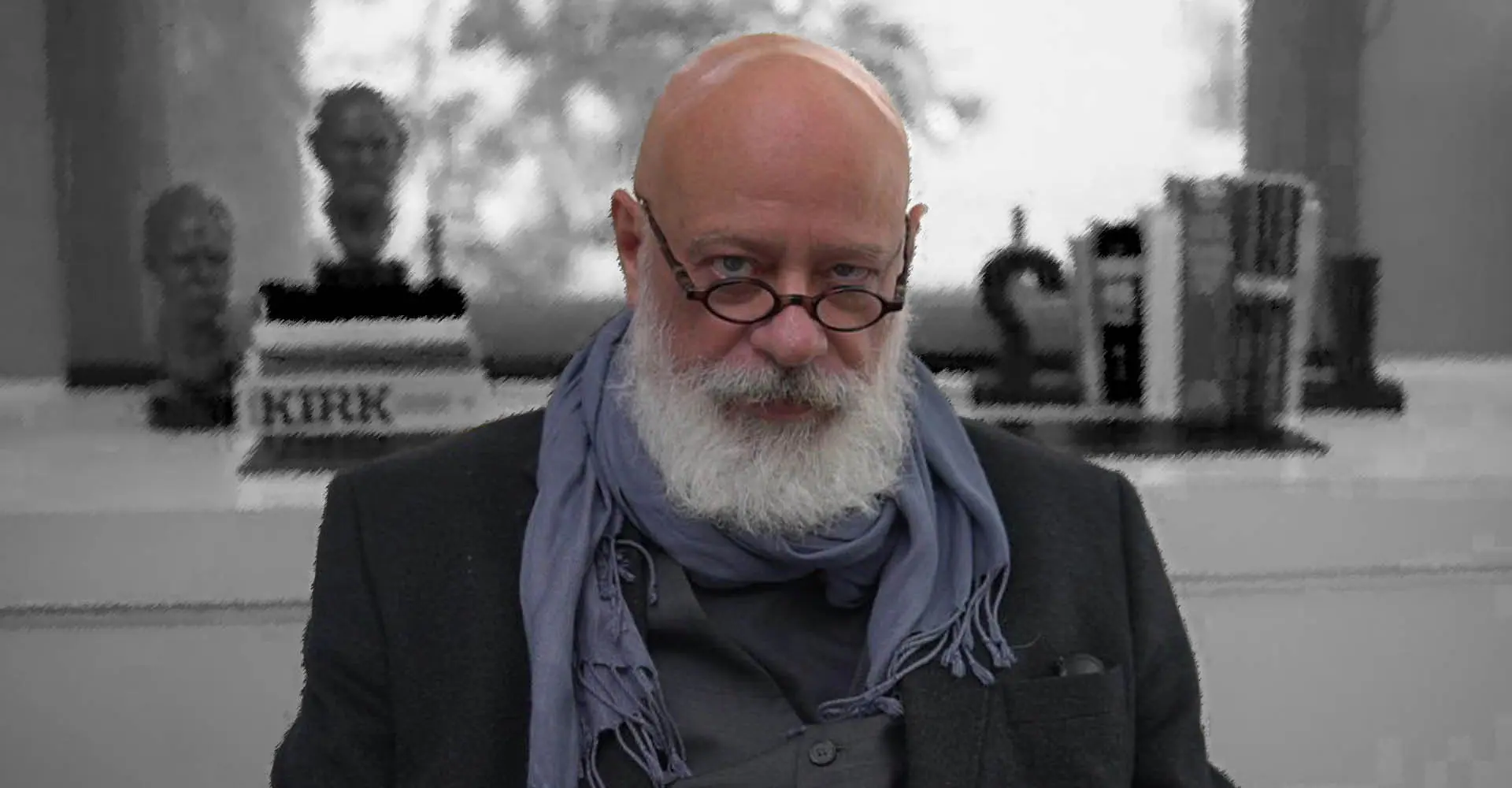
Research indicates that since the 1970s, the left has built a majority in universities, leveraging concepts of occupation of cultural spaces theorized by the Italian Antonio Gramsci (1891–1937). According to these ideas, political battles are not won solely at the ballot box or through state power, but via cultural hegemony — where a worldview becomes dominant in schools, universities, unions, churches, and media outlets. Educational institutions, teachers’ unions, textbook publishers, and student associations were progressively dominated by intellectuals aligned with currents of Marxism. This shaped curricula and knowledge production, fostering a university culture where divergences were viewed as unwelcome.
In an article published in the journal Dados (2012), Marco Aurélio Santana, a professor in the Graduate Program in Sociology and Anthropology at the Federal University of Rio de Janeiro (UFRJ), demonstrated that Brazil’s democratic transition intensified this presence. Inheriting the “new unionism” of the 1970s and 1980s, the Workers’ Party (PT) surpassed the Brazilian Communist Party (PCB) to become the primary force of the left. This advance also permeated academia. The PT and intellectuals close to the party began occupying strategic positions and directly influencing research agendas and university administration. From the 1990s onward, conservative ideas came to be perceived as threats to an ideological consensus.
This hegemony generates a vicious cycle. “Left-wing professors, who constitute the majority in universities, end up hiring only other left-wing professors,” explains political scientist Fernando Schüler. “They are also the ones promoted, invited to participate in seminars, and invited to publish their work. A friend who teaches at USP often says that the right-wing professor eats lunch alone in the university restaurant. No one sits with him.”
The youth reacts
During a public hearing of the Chamber of Deputies’ Education Committee on September 2nd, students reported incidents of aggression and intimidation at Brazilian universities. The meeting was convened by Federal Deputy Adriana Ventura (Novo-SP). Thais Batista, executive director of the Students for Liberty (SFL) organization, asserted that the academic environment has become hostile to dissenting ideas. “Every week, every day, we receive reports of study groups forming almost in silence, as if they were secret societies, because professors and students are afraid to take a stand,” she recounted. “And those brave enough to defend their ideas end up taking a beating. It’s a disgrace for universities.”
According to the Sivis Institute’s survey, 47% of students admitted to having avoided discussing a controversial topic in class over the past 12 months. The issues causing the most discomfort are politics and elections (39%), gun legalization or ownership (37%), and abortion (29.7%). “A young person silenced today ends up being a potential leader lost tomorrow,” Thaís observed.
Bruno Sperancetta, national president of Juventude Livre (JL) — or “Free Youth”—, recounted the movement’s experience at the National Student Union (UNE) Congress in Goiânia this July. On that occasion, members of JL and Novo Jovem (“Novo Party’s Youth”) were assaulted while attempting to participate in the event. “They weren’t there to dialogue,” he stated. “They ended up kicking us out, hitting us with chairs, attacking us with everything they could get their hands on.” Sperancetta blamed UNE for the lack of security. In his view, academic directories and student centers are “completely co-opted by partisan youth groups” and seek to impose an ideological playbook.
The impoverishment of culture
According to philosopher Luiz Felipe Pondé, who taught at USP, the Pontifical Catholic University (PUC-SP), and the Armando Álvares Penteado Foundation (FAAP), “universities were created to be environments of free thought, but today, singular thinking and ideological policing predominate.” He warns that in Brazil, the lack of market diversity hinders change: “Here, young people need to self-censor to survive professionally.” Professors, he claims, “believe they are fighting for good” and fail to realize that “by restricting divergent thought, they impoverish culture.”
For councilwoman Janaína Paschoal, a full professor at the Largo São Francisco School of Law, “every struggle is aimed at ensuring gender and racial plurality, which is perfectly valid, but ideological plurality is not something universities fight for,” she observes. “Since this ‘oxygenation’ among professors doesn’t exist, students who think differently feel crushed. But the right needs to occupy this space; otherwise, the left will continue to dominate it.”
Cases like those of Victor Ahlf, Wilker Leão, Julia de Castro, and Sandra Bosco reveal the concrete face of this reality. The murder of Charlie Kirk in the United States highlights the international escalation of intolerance. In both scenarios, the conclusion is identical: institutions established to foster free thought have transformed into environments intent on stifling dissent. At any cost.





















Entre ou assine para enviar um comentário.
Você precisa de uma assinatura válida para enviar um comentário, faça um upgrade aqui.