

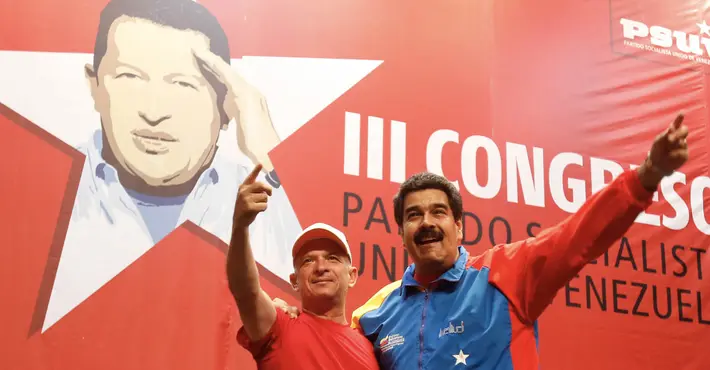
A hurricane is brewing in North America, and this time it’s not El Niño but El Pollo (“the chicken”). This is the nickname of former Venezuelan general Hugo Armando Carvajal, who has fallen into the clutches of the U.S. justice system. When he stands before a judge in the Southern District of New York to hear his sentence at the trial scheduled for November 19, 2025, Carvajal will finally learn the weight given to the evidence he provided in his cooperation agreement with U.S. authorities. To escape a life sentence, or a term that, at 65, would mean dying in prison, Hugo El Pollo Carvajal will have to deliver far more than just the head of his former ally, Venezuelan dictator Nicolás Maduro.
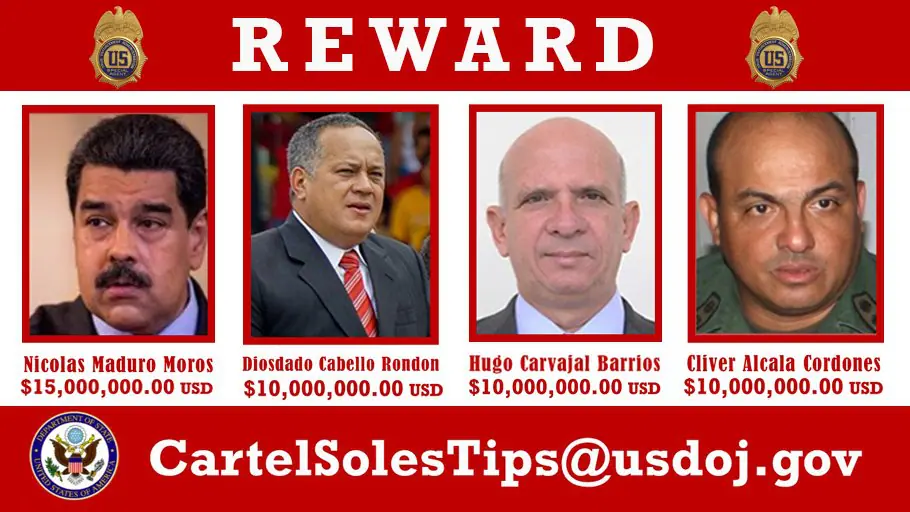
El Súper Bigote (“The Super Moustache”), as Maduro dubbed himself, is already sufficiently discredited before the free world for clinging to power after losing the 2024 elections. Cornered in the Caribbean waters by a U.S. military blockade, under accusation of leading a cartel that profits from drug trafficking to the United States, Maduro could fall at any moment. Therefore, he is no longer such a useful trump card for Hugo Armando Carvajal Barrios. Carvajal’s real leverage lies in proving that, as Venezuela’s director of Military Intelligence under both Hugo Chávez and Maduro, he was part of a vast network that illegally funded the electoral campaigns of left-wing candidates in several countries. His revelations target two European nations, Spain and Italy, but concentrate heavily on Latin America. As a founder of the Foro de São Paulo (“São Paulo Forum”) — a political movement articulated in 1989 alongside the late Cuban dictator Fidel Castro —, Lula and the country he governs for the third time are at the eye of the Carvajal hurricane.
Receba nossas atualizações
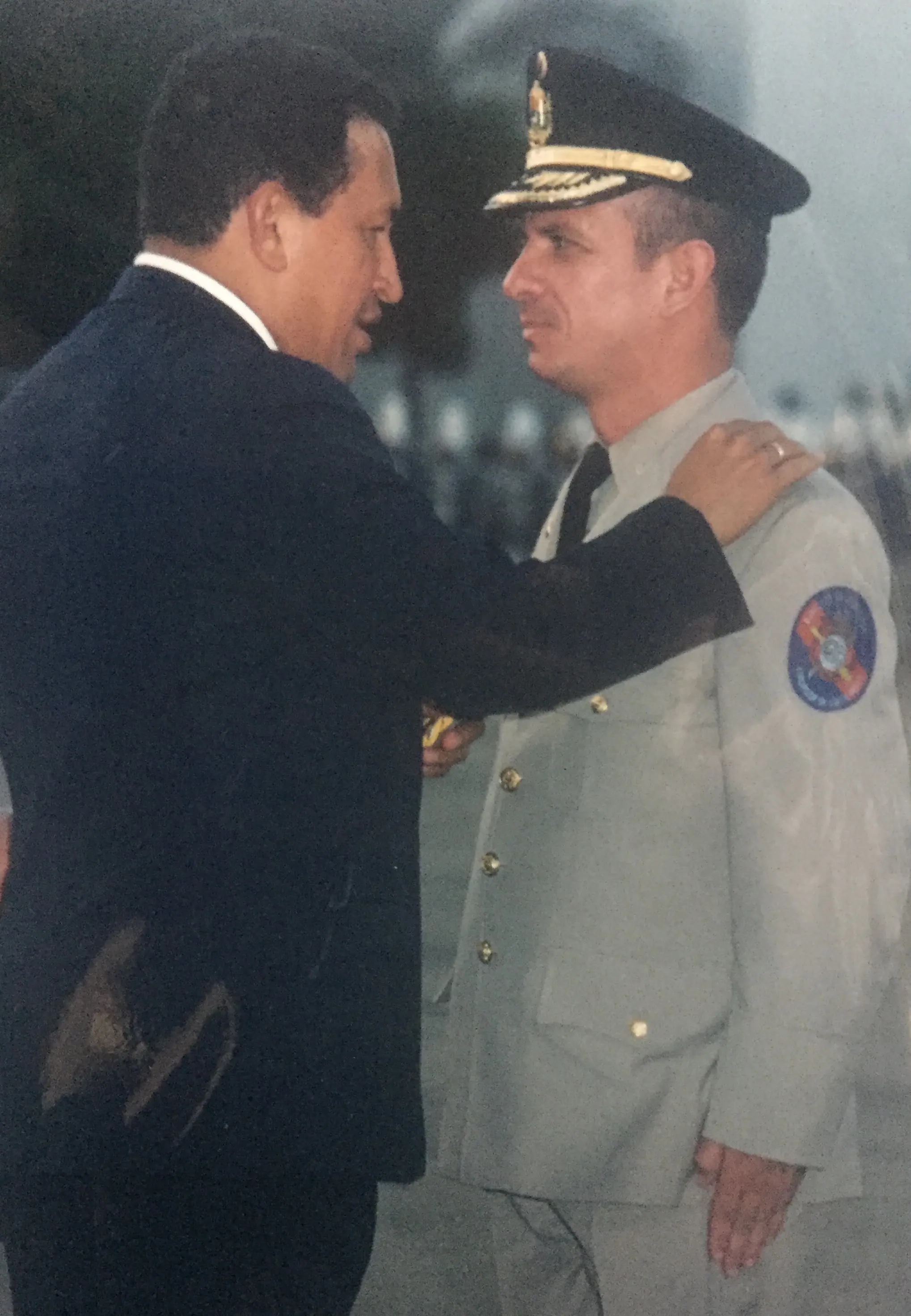
So, who is this figure who now has the Latin American leftist elite holding their breath? First and foremost, Carvajal is a disciple of Hugo Chávez. He met his mentor as a teenager and received the nickname Pollo, supposedly due to his physical build. Their camaraderie in the Venezuelan military academy evolved into an audacious adventure: following Chávez in the failed 1992 coup attempt against Carlos Andrés Pérez’s government. Both were arrested and released two years later. In 1999, with Chávez’s ascent to Palácio de Miraflores, this time through the ballot box, Pollo Carvajal could finally crow, elevated to the post of Military Intelligence director in a country blessed with the world’s largest oil reserves.
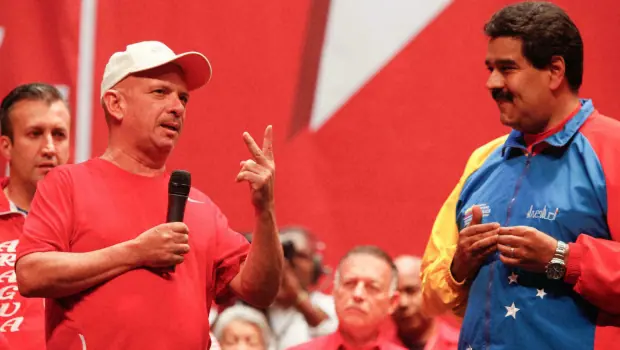
The abundant money from incredibly plentiful oil led to excesses already well-documented in Venezuela’s missteps during the latter half of the 20th century. However, Chavismo made delusional use of its opulence on the geopolitical stage, pursuing the dream of building a Bolivarian Pátria Grande (“Great Fatherland”) across a string of Latin American countries, staining the region’s map red with socialist-leaning governments. Close to Chávez, Carvajal diligently carried out all missions — underline “all” — until the Bill Clinton administration put him in Washington’s crosshairs. In 2008, Carvajal landed on the official U.S. sanctions list for connections to arms and drug trafficking, supporting the FARC guerrilla group in Colombia.
This sanction ultimately weighed against Carvajal’s aspirations to be anointed Chávez’s successor in 2013 when cancer claimed the commander’s life. Chosen as interim leader, Maduro clung to the presidential chair and walled up the regime. Carvajal remained as director of Military Intelligence, but with severely curtailed influence; he already suspected that Maduro would not tolerate any shadows over his leadership — neither Maduro nor, least of all, the new leader’s number two, Diosdado Cabello, who, as the regime’s strongman, now occupied the role Carvajal himself once played under Chávez.
Carvajal fell from grace with the regime when he left military activity and entered politics. In 2017, as a congressman, he proposed a negotiated transition between the government and the opposition to avert what he saw as the risk of civil war. He was ignored. He then decided to publicly break with the regime in 2019 when, in an interview with The New York Times, he urged his fellow servicemen to support the transfer of power to the president of the Venezuelan Congress, Juan Guaidó. Maduro initiated a treason prosecution, and Carvajal fled to Spain with a false identity, where he was captured shortly after. He evaded custody after receiving conditional release and was eventually recaptured in September 2021. That’s when the United States requested his extradition.
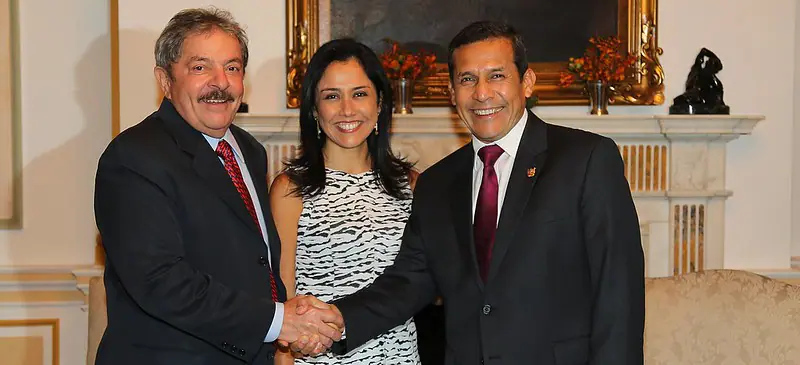
While attempting to halt his extradition process, Hugo Carvajal informed authorities in Madrid that he was a witness to a period of “at least 15 years” during which the Venezuelan regime diverted funds from its colossal state oil company, PDVSA, to illegally finance left-wing movements. He named, as recipients of the money, the campaigns of Lula in Brazil, Gustavo Petro in Colombia, Cristina Fernandez de Kirchner in Argentina, Evo Morales in Bolivia, Fernando Lugo in Paraguay, Manuel Zelaya in Honduras, and Ollanta Humala in Peru. It is worth noting that, in April this year, the former Peruvian president and his wife, Nadine Humala, were convicted of money laundering in a case involving millions in transfers from Brazilian company Odebrecht to the Peruvian electoral campaign. Ollanta was imprisoned. Nadine received asylum from the Lula government, which dispatched a Brazilian Air Force (FAB) plane to retrieve her shortly before she was to be arrested. She remains free and well-guarded in Brazil.
Spain took two long years to hand Carvajal over to U.S. justice, a delay that prompts speculation of political pressure from the European left. After all, Carvajal maintained that Venezuela illegally financed the founding of Spain’s Podemos (“We Can”) party and Italy’s Movimento 5 Estrelas (“Five-Star Movement”), both left-wing.
The U.S. justice system’s delay in interrogating Carvajal is also striking. He arrived in the United States in July 2023 and remained there, in a kind of political limbo, for a year and a half. Why?
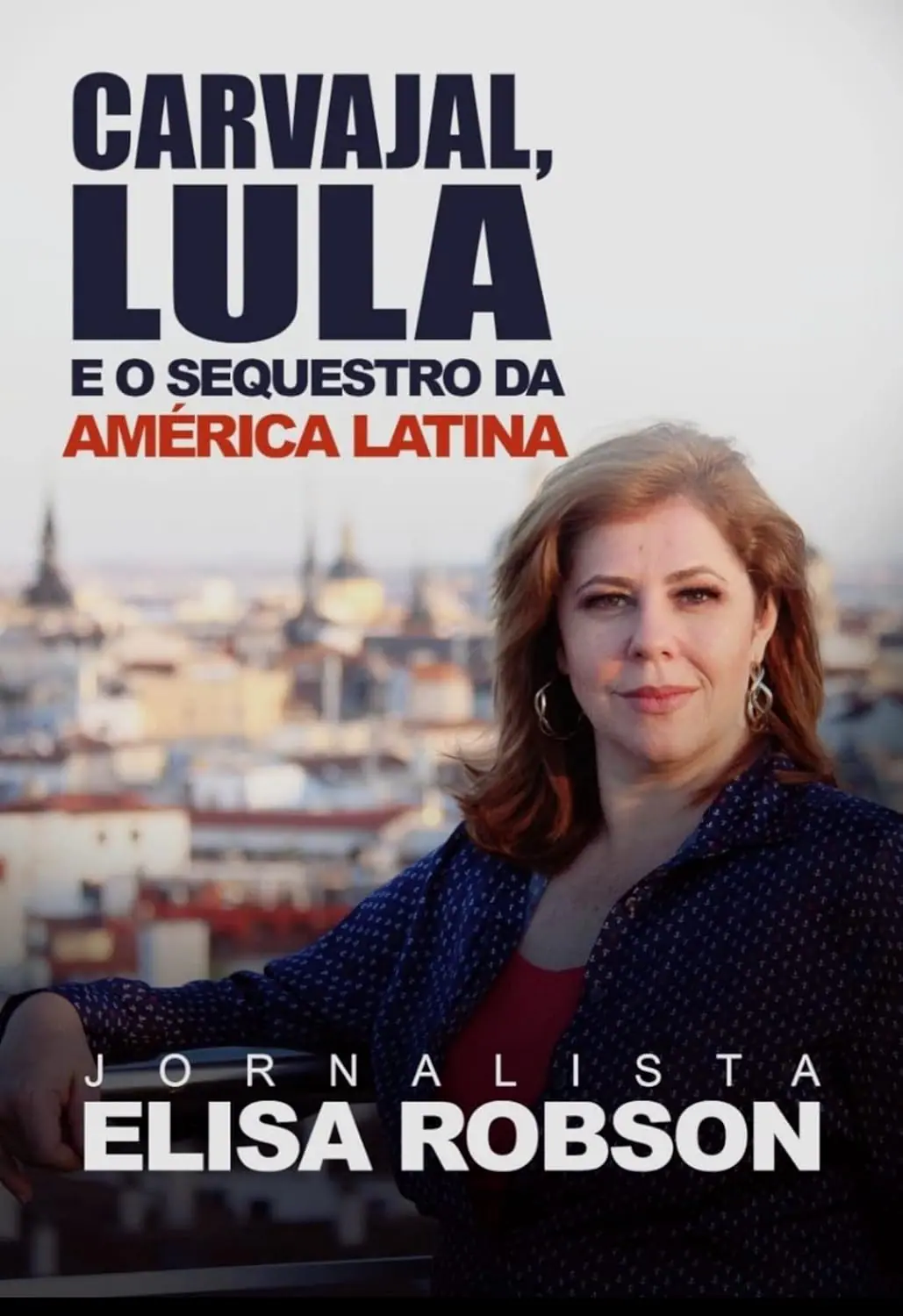
Elisa Robson, a Brazilian journalist and author of the 2022 e-book Carvajal, Lula e o Sequestro da América Latina (“Carvajal, Lula, and the Kidnapping of Latin America”) offers a hypothesis as a privileged observer of the case. She moved to the United States in 2023 after feeling pressured by the web of arbitrary and secret inquiries conducted by Alexandre de Moraes.
Elisa noted investigators’ discontent with Joe Biden’s decision to release and send to Venezuela one of Maduro’s key allies, Colombian businessman Alex Saab, who faced money laundering and corruption charges in the United States. “They feared that if they moved on the Carvajal case, he might also be included in Biden’s deal with Maduro and handed over.” The Biden-Maduro agreement, brokered by Qatar, stipulated the release of Americans imprisoned by the Caracas regime and the holding of free elections in Venezuela in 2024. That was the election Maduro lost but claimed he won, chasing away both the elected candidate, Edmundo Gonzáles, and his staunch supporter, Maria Corina Machado, recently awarded the Nobel Peace Prize — under the awkward silence of the Brazilian government.
When Donald Trump returned to the White House in 2025, Carvajal once again became an explosive topic in the United States and Latin America — less so, naturally, for certain “mainstream” Brazilian media outlets, which, whether out of fear of censorship or other motivations, see no public interest in the matter. Be that as it may, news doesn’t wait for the distracted messenger, as people say. And on June 25 this year, official news glittered, coming directly from the office of the U.S. attorney for the Southern District of New York, Jay Clayton.
Clayton and the DEA director announced that Hugo Armando Carvajal Barrios had just pleaded guilty to all charges against him. Brought before district judge Alvin K. Hellerstein, Carvajal admitted his participation in conspiracies to introduce cocaine into the United States. He also confessed to involvement in narcoterrorism benefiting the Revolutionary Armed Forces of Colombia (FARC) guerrilla group. And he pleaded guilty, likewise, to other weapons-related crimes.
U.S. attorney Jay Clayton’s statement indicated that Carvajal pointed the finger at high-ranking members of the Venezuelan government who, he claimed, act as leaders and administrators of the Cartel de los Soles (“Cartel of the Suns”). It was not without basis, therefore, that Trump and his secretary of State, Marco Rubio, frequently began to mention the Cartel de los Soles and Nicolás Maduro’s supreme role in the organization.
The military encirclement of the Venezuelan coast and Trump’s recent authorization from the American Congress to conduct intelligence operations within Venezuelan territory are developments stemming from information already provided by El Pollo Carvajal — and many more elements have been added in the past few weeks. By pushing the former general’s trial from October 29 to November 19, the American justice system signals that the material it has received is robust and requires extensive processing.
For now, everything is anticipation regarding the trial’s outcome, and it is likely that Carvajal’s most sensitive information will remain classified, but the consequences will be swift. Among all predictions, Elisa Robson’s deserves special attention; she believes Carvajal’s testimony will drastically shake power structures in Brazil. What lends her credibility is the fact that, just a few weeks ago, she interviewed Hugo Carvajal through an electronic system provided by the U.S. Justice Department. She doesn’t yet know what she will do with the material. The publication of a new book is being considered, depending on new developments in “Pollogate.”
Born in Porto Alegre and later based in Paraná, Elisa managed the feat of being noticed and received by Carvajal for the simplest possible reason. One September afternoon in 2021, while sifting through international news, she read about Carvajal’s arrest in Spain and wanted to know more about this figure who had just been apprehended in Madrid and appeared to implicate the Brazilian and Latin American left in an intriguing web of influence. Her curiosity led her… to nothing. Silence from the Brazilian press that refers to itself as “mainstream media” or “professional journalism.”
Undeterred, she scoured websites, cross-referenced analyses, and realized the immensity of the “story”. With the help of a friend, she deepened and refined her research and, pooling her meager savings, decided to go to Madrid with sheer courage to see if they would let her speak with “El Pollo.” After a week of wandering aimlessly, she reached his lawyer, Maria Dolores Arguelles. And through the lawyer, she reached Carvajal’s wife, Angélica Flores.
“Carvajal is not running from justice!” Angélica told her. “He is looking for justice!”
Angélica, whom Elisa described as “a sharp young woman,” proclaimed Carvajal’s readiness to “end Nicolás Maduro’s dictatorship” in Venezuela. “Angélica assured me that her husband knows Maduro very well. Because Maduro was his informant in the past.”
Through his wife and lawyer, Carvajal agreed to receive a questionnaire from Elisa and answer what he felt he should. With this material, Elisa wrote her book in 2022.
But some questions continued to nag her, and three years later, with the extradition complete and on the eve of Carvajal’s trial, Elisa again requested an interview, and again it was granted. Carvajal confirmed that he possesses serious allegations concerning Brazil but evaded detailing what might be in the trove of evidence now reaching U.S. authorities. Elisa’s bet is that Maduro will fall. “And when Maduro falls, you will see something shocking in Brazil. Many, many people will retreat. Including in the Supreme Court.”
One of the questions Hugo Carvajal chose not to answer for Elisa concerned the use of “diplomatic bags” to finance campaigns in Brazil, a method that, according to what he denounced to Spanish justice in 2021, was used by the Caracas regime to funnel, for example, over US$ 20 million into Cristina Kirchner’s presidential campaign in Argentina in fractional amounts. Hugo Chávez allegedly dispatched 21 flights to Buenos Aires throughout 2007, each carrying diplomatic bags with US$ 1 million each. “I tried to find out details about the use of diplomatic bags to send money to Brazil, but this was a point he avoided answering, as with other topics that might be part of his cooperation with U.S. justice.”
On one topic, in particular, Carvajal was assertive: the cross-border activities of Brazilian organized crime and its connections to other criminal groups, including the Cartel de los Soles. The Lula government’s refusal to adhere to Washington’s efforts to classify the PCC and Comando Vermelho as terrorist organizations adds tension to relations between the two countries. “After Venezuela,” Elisa believes, “Brazil could be the next target of U.S. actions, like what we are seeing in the Caribbean, including CIA involvement.”
As mentioned at the outset, the severity of the sentence that the U.S. court will hand down to Hugo “El Pollo” Carvajal, starting at 12 PM on November 19, will indicate the gravity and validity of his accusations that the Venezuelan regime and its allies mix drug and arms trafficking with political battles in the region. If he receives a light sentence, it will signal that he has become a human bomb. It will be a torment for political leaders who built careers within the Foro de São Paulo, the successful creation of Lula and Fidel Castro. But if he is condemned to life imprisonment, the Latin American left may feel relieved and share the sense of absolute tranquility expressed by justice Alexandre de Moraes to The New Yorker magazine when he commented on the sanctions imposed by the Donald Trump administration on Brazil—and on him, in particular. “If they send an aircraft carrier, then we’ll see. If the aircraft carrier doesn’t reach Lago Paranoá, it won’t influence the decision here in Brazil.”
We shall see.






THIS IS THE MOMENT TO CHANGE THE BRAZIL DIRECTION !
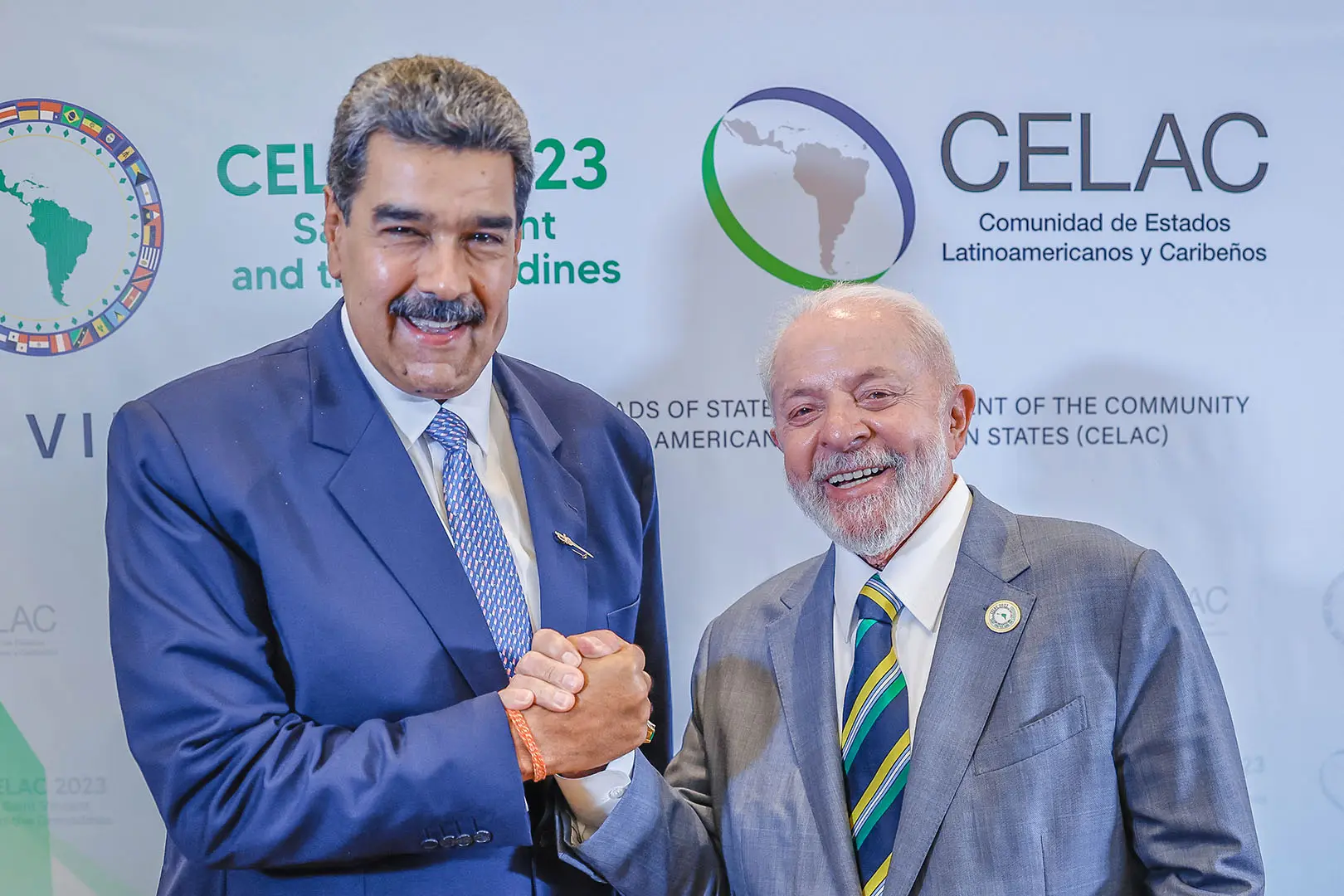
This is the reason why Lula is offering himself to be negotiating between Maduro and Trump. Lula and Dilma were deeply involved with corruption between both countries. Brazil needs a strong shake to return to the rails leading to Order and Progress.
🤮🤮🤮🤮🤮🤮🤮🤮🤮🤮🤮🤮🤮🤮🤮